Colombian mercenaries, regular transport flights and cargo marked ‘hazardous’ reveals a vast covert operation fuelling the RSF massacres in el-Fasher At Bosaso Airport in Somalia’s Puntland state, the thunderous sound of large aircraft hitting the tarmac echoes out across the port city.
Minutes after landing, the aircraft can be identified. It is a white IL-76 heavy cargo transport plane, and it is parking next to a very similar aircraft.
For local residents, the sound of such planes was unusual two years ago, when they first began landing in Bosaso. Not anymore. Moments later, undisclosed heavy logistical materials are seen being offloaded from the aircraft.
“They’re frequent and the logistics are transferred immediately to another aircraft that is on standby and is destined for the paramilitary Rapid Support Forces (RSF) in Sudan through the neighbouring countries,” said Abdullahi, a senior Puntland Maritime Police Force (PMPF) commander at Bosaso Airport, who spoke to Middle East Eye using a different name for security reasons.
According to flight tracking data, satellite imagery, multiple local sources, and US and regional diplomats, the origin of these planes and their cargo is clear: the United Arab Emirates.
The destination, as Abdullahi said, is Sudan and the RSF, which this week has captured el-Fasher, the capital of North Darfur state, after over 500 days of siege. The paramilitary’s fighters have committed terrible atrocities in the wake of their triumph, filming themselves massacring fleeing civilians and carrying out mass executions at hospitals.
Over a period of months, a pattern could be seen in the cargo aircraft tracked by MEE coming into Bosaso.
The planes would not remain long at the airport and would arrive during periods of minimal activity at the airport. Publicly available air traffic data shows that the UAE increasingly uses Bosaso Airport as the arrival times of the aircraft are sometimes changed.
“During loading and offloading, they are heavily guarded, as they carry sensitive materials and logistics that are not publicly disclosed,” Abdullahi said. Supplies also come into the port at Bosaso. For years, the UAE has been funding Puntland’s PMPF, a regional force established to combat piracy. The soldiers there say none of the materiel arriving on transport aircraft is brought to their camp, as the shipments are large and beyond their requirements.

Flight tracking data previously reported by MEE has revealed that the UAE has significantly increased the supply of weapons into Bosaso, with US intelligence saying that these include Chinese-made drones.
A senior manager at Bosaso’s port revealed for the first time to MEE that, for the past two years, the United Arab Emirates has funnelled over 500,000 containers marked as hazardous through Bosaso.
Unlike standard cargo, which is documented with a letter of origin and destination, these Emirati shipments have no description of their contents. The port manager said that the logistics operations are shrouded in secrecy: upon arrival, the containers are swiftly transferred to the airport and loaded onto standby aircraft.
Security for these shipments is exceptionally tight, MEE’s sources in Bosaso said. When a ship docks, PMPF forces are deployed to cordon off the port and prevent filming. Only personnel on duty are granted access, and they are explicitly warned against recording anything during the offloading and transit process.
The sources contended that the clandestine nature of the operation proves the goods were not for domestic use.
“If they were, we would see where they were stored or find the empty containers,” the senior manager said. Instead, he said, “it was just transit”, meaning that Bosaso was a covert stopping point.
Middle East Eye wrote to the government of the UAE and to regional authorities in Puntland requesting a response. Neither replied. The UAE has previously denied sponsoring the RSF.
Colombian mercenaries
Located on the southern coast of the Gulf of Aden, Bosaso airport hosts several heavily fortified military facilities, including one occupied by UAE commanders and security personnel believed to be South Africans.
To the north of the airport lies a separate camp housing Colombian mercenaries involved in the war in Sudan.
Pictures exclusively obtained by MEE show dozens of Colombians carrying backpacks disembarking from an aircraft at Bosaso airport and heading directly to the camp.
When shown the images, Abdullahi immediately recognised them, saying: “Yes, they’re Colombian mercenaries operating from here in large numbers.”
The Colombian personnel arrive in Bosaso on international commercial flights, transiting through the airport almost every day before continuing on to Sudan, where they fight alongside the RSF.
Somali soldiers from the PMPF, who are stationed at the airport, rarely have access to the Colombians’ camp. Abdullahi explained that “the mercenaries have built a new hospital within their compound, which they use to treat soldiers wounded in Sudan.
“I recall one occasion when a plane carrying injured soldiers landed at Bosaso airport and the aircraft door was visibly stained with blood,” he said.
The maritime police officer told MEE that the camp also serves as a medical transit point for wounded RSF fighters, who are later flown to other destinations for further treatment.
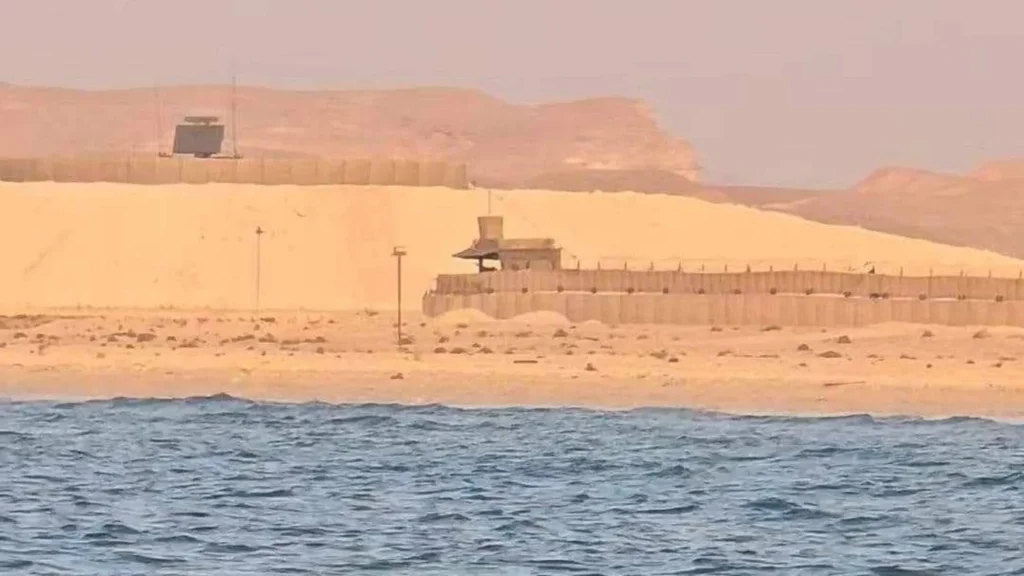
Just next to the airport, the United Arab Emirates has installed a military radar system – believed to be French – designed to protect Bosaso airport from potential attacks.
As MEE reported recently, Bosaso is connected to a ring of bases built and expanded by the UAE across the Gulf of Aden and Red Sea. The bases, on the islands of Mayun, Abd al-Kuri, Samhah; at the Somaliland port of Berbera and the Yemeni port of Mocha, are all on territory nominally controlled not by the UAE but its allies or clients.


Source: Middle East Eye